SaaSGrid is now Grid! Read about our evolution here.
In our guide to managing SaaS contracts, we drew a line between two very different problems that both get called SaaS contract management.
One is buy-side: tracking what your company purchases from other vendors. The other is sell-side: tracking the contracts your own customers sign with you, so those terms feed cleanly into ARR, renewals, and NRR.
This guide is about choosing software for the second problem, as a B2B SaaS company managing customer contracts. And to be upfront: this isn't a ranked "best 5" list. These five tools solve five different problems. Some of them aren't even really competing with each other. The right one depends entirely on which gap you're actually trying to close.
Before looking at specific products, it helps to know which of these actually matter for your situation:
If you haven't already, it's worth running through our guide to managing SaaS contracts first, so you know exactly which of these gaps you're solving for before you sit through five demos.
Here's how they break down at a glance. Each one is genuinely built for a different job, not a different tier of the same job.
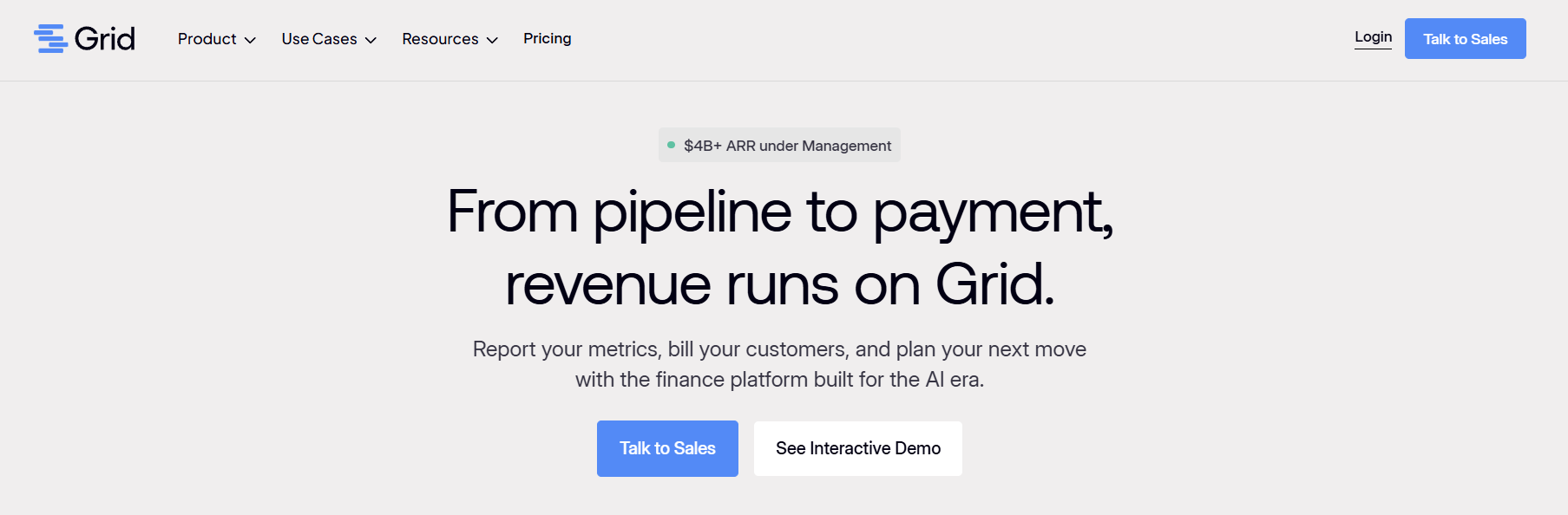
Most contract management software is built for legal teams or for IT teams tracking vendor spend. Neither of those is the actual job for a finance or RevOps team at a B2B SaaS company. The job is making sure the terms a customer agreed to (price, seats, renewal date, escalators) show up correctly in the numbers you report and forecast.
That gap shows up constantly: a deal closes in the CRM, the contract terms live in a PDF, and by the time it reaches revenue reporting, someone has re-typed the numbers or missed a renewal clause entirely.
Grid ties contract terms directly to billing and revenue reporting instead of treating them as a separate, disconnected step. Signed deals flow into invoice schedules and recognized revenue automatically, and metrics like ARR and NRR reflect actual contract terms rather than a rough estimate. For a finance or RevOps team, that's the difference between managing contracts as paperwork and managing them as the source of your revenue forecast.
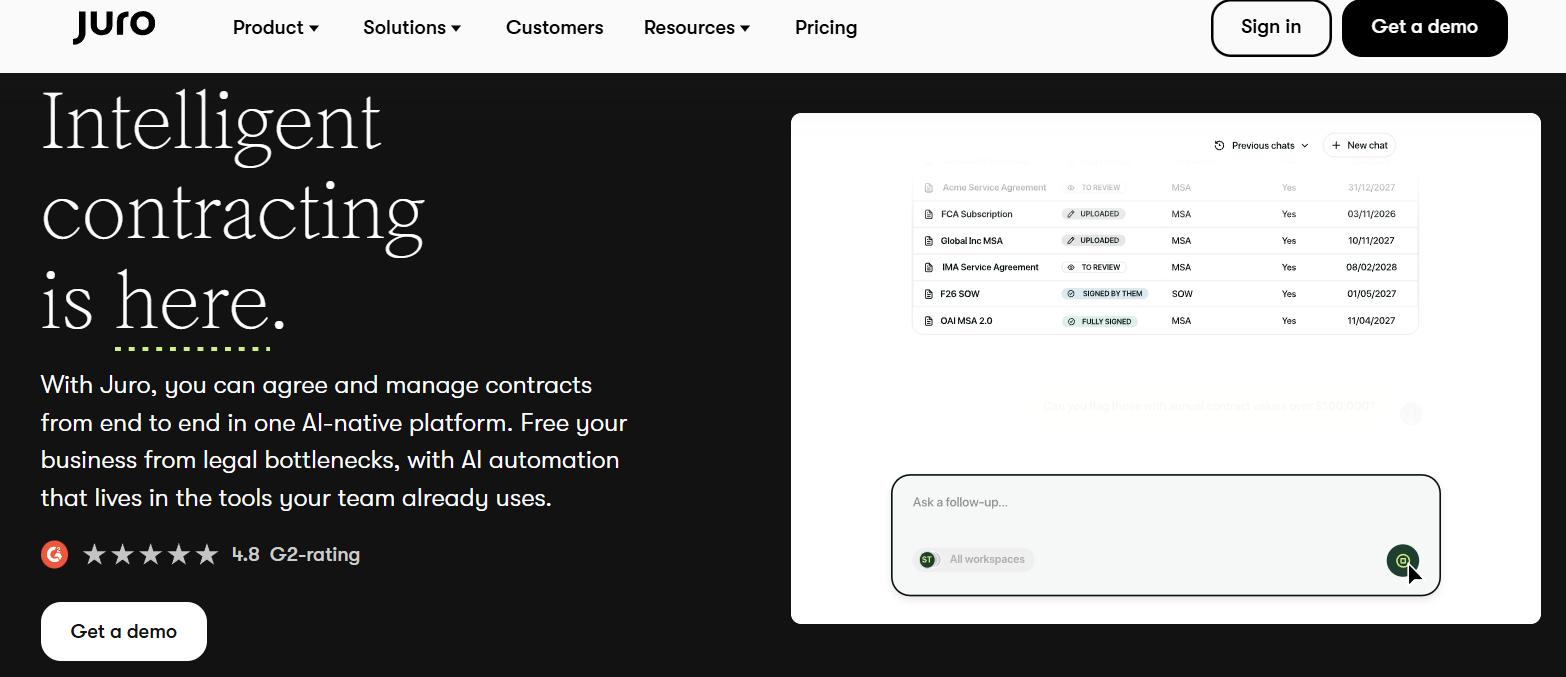
If your bottleneck is contract creation itself, drafting, redlining, and getting signatures on a high volume of fairly standardized customer agreements, that's a different problem than revenue reporting. A small legal team supporting a fast-moving sales org can end up as the thing slowing every deal down.
Juro is built browser-native rather than Word-based, which makes it fast for non-legal teams to self-serve on standard contract types without waiting on legal for every redline. It's a strong fit specifically for the drafting-to-signature stage of a customer contract's life, though it's not built to connect that data to your revenue reporting the way a finance-native tool would.
Once a company is negotiating contracts across more than just sales (procurement, HR, vendor agreements) with real complexity and multiple approval chains, the requirements change. This is less about speed and more about configurability and control.
Ironclad's workflow designer lets legal teams build conditional approval logic and highly customized contract processes, which is why it's a common choice at larger organizations with genuinely complex negotiation needs. That flexibility comes with a steeper learning curve and a longer implementation, which is the tradeoff for teams that need it.
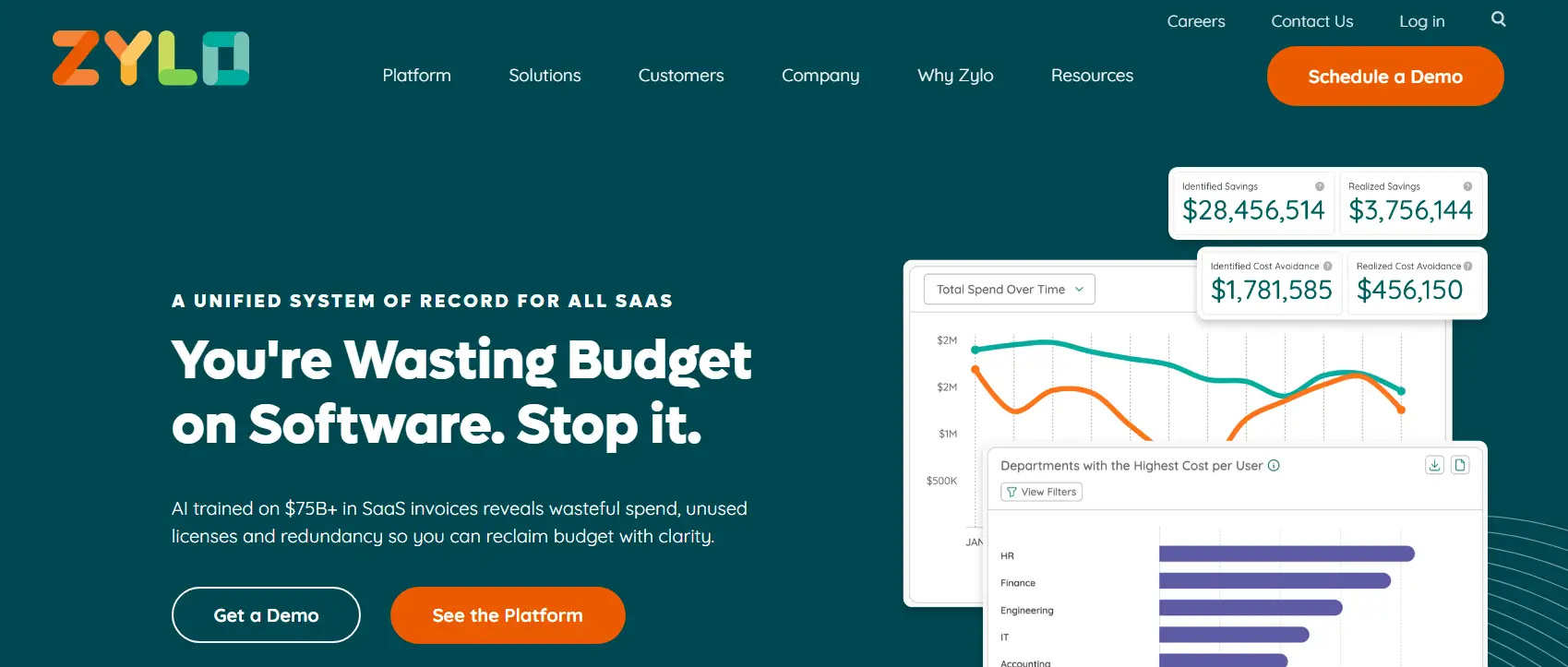
This is the one genuinely different problem on this list: not tracking what your customers sign with you, but tracking what your own company buys from other SaaS vendors. Even a SaaS company selling its own product still has a stack of tools it pays for internally, and that spend needs its own visibility.
Zylo is built specifically for buy-side visibility: discovering shadow IT, tracking license utilization, and flagging renewals before they auto-renew at a higher price. It's not a fit for tracking your own customer contracts, and it's not trying to be. If your team needs both sides covered, this is a separate tool from whatever you use for customer contract tracking, not a replacement for it.
Some contracts don't just need to be tracked, they need to be actively monitored after signature: SLA commitments, renewal notice windows, compliance certifications, and vendor or customer performance against agreed terms. At real scale, that's not something a spreadsheet or a basic tracker can keep up with.
Sirion's AI-driven extraction and obligation monitoring are built for exactly this: flagging deviations, tracking SLA performance, and surfacing renewal and compliance deadlines across a large portfolio. It's a heavier, more enterprise-oriented tool than most B2B SaaS companies need for customer contract tracking alone, but it's the right fit when obligation complexity is the actual problem.
The question isn't which of these five is "best." It's which specific gap you're trying to close. Revenue tied to contract terms, contract creation speed, complex negotiation workflows, internal SaaS spend visibility, or obligation tracking at scale are five different problems, and trying to solve all of them with one tool usually means solving none of them well.
If the gap you're closing is finance and RevOps not having contract terms reflected in your actual revenue numbers, that's the problem Grid is built for.


The Burn Multiple has some of the cleanest rules of thumb in SaaS. We tested those rules against 130+ real companies' books, and most of them are beating the textbook.

Explore the top revenue intelligence tools for SaaS teams in 2026 and see which platforms stand out.
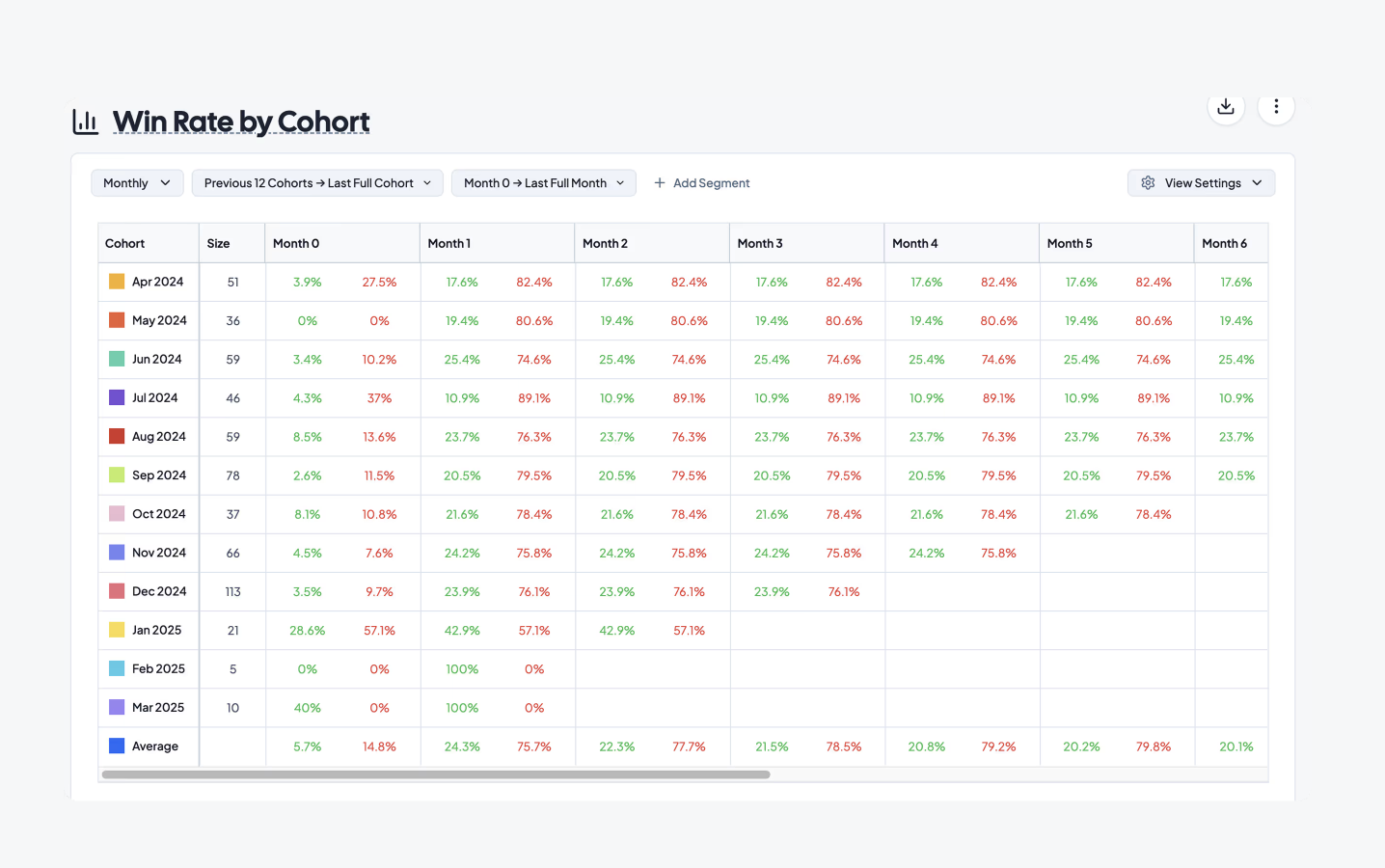
What if there was a way to click around, validate KPI accuracy, and run a cohort analysis before you sign the contract?